Peter Giddings Racing
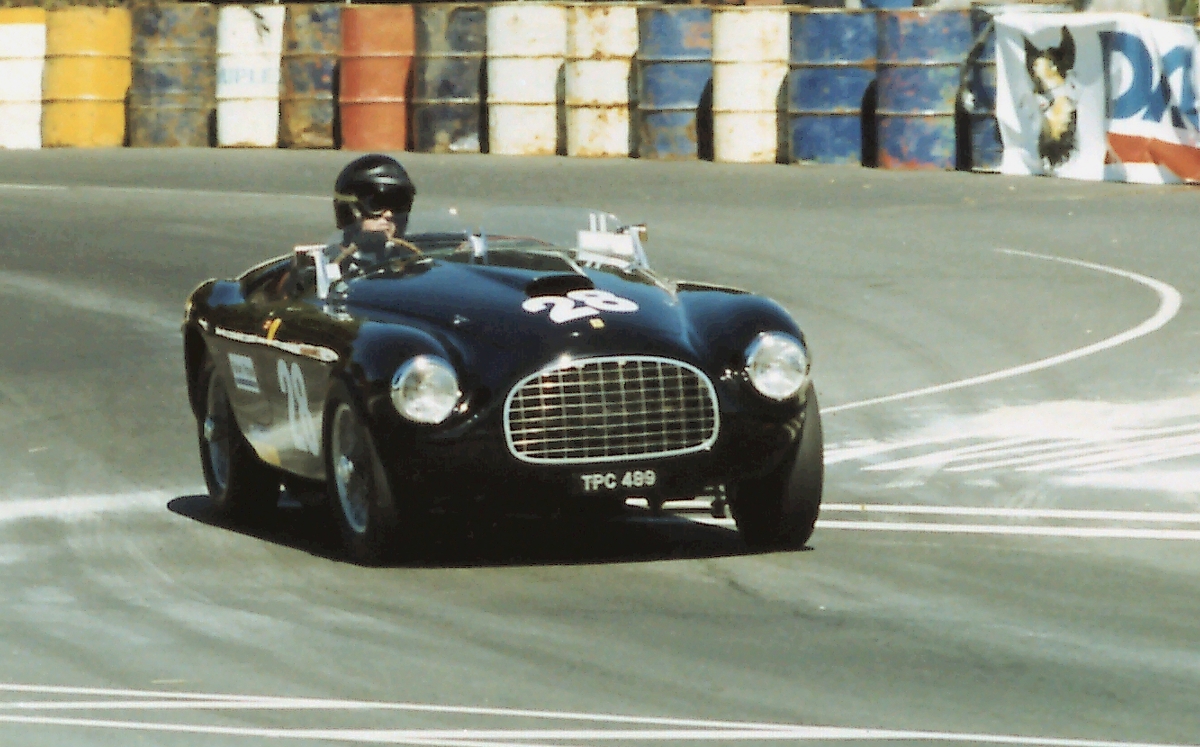
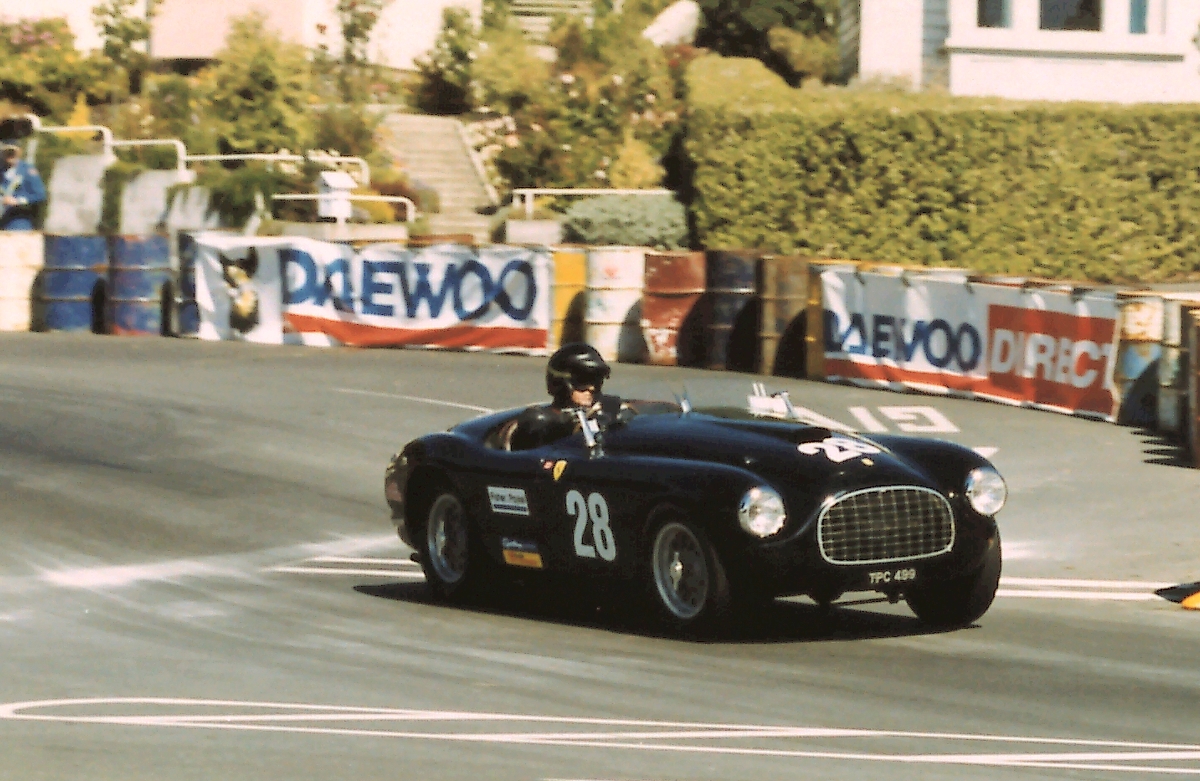
1951 Ferrari 212 Barchetta Export - Chassis Number 0165EL, Engine # EU247The Ferrari 212 was the successor to the Ferrari 166. The primary difference is the larger engine of the 212. In fact, the 212 differed so little from the 166 mechanically that many chassis and engine parts are interchangeable. Ferrari constructed the rolling chassis and these were delivered to various coachbuilders to be bodied. As a result no two Ferrari 212’s are exactly the same. Nearly all bodies were berlinettas for the road cars and barchettas for the sports racing cars. As a dual purpose car, the 212 was built in two different states of tune. The Inter was intended to be the road version and had a slightly longer wheelbase of 98.5 inches and a single Weber DCF carburetor giving about 150 bhp. The Export model was the sports racing version, with a wheelbase of 88 inches, higher compression ratio, a larger fuel tank, and triple Weber DCF carburetors, giving about 175 bhp at 6500 rpm. Redline was 7000 to 7200 rpm. All the 212s shared the same basic frame construction having a tubular steel ladder design with oval section main tubes and round section cross tubes. Front suspension is independent with double wishbones and a transverse leaf spring while the rear suspension is a live axle with semi-elliptic leaf springs and parallel trailing arms. Lever action Houdaille shocks are used at all wheels. The hydraulic brakes use large aluminum drums with cast iron liners. The Colombo-designed engine is a 60 degree V12 with a single chain-driven overhead camshaft on each cylinder bank. For the 212, the bore is 68 mm and the stroke is 58.8 mm, giving a displacement of 2562 cc or 156.3 cubic inches. There are two inclined valves per cylinder using rocker arms and finger followers. Each valve is closed by two hairpin style springs. The engine block, heads, and sump are cast aluminum with cast iron cylinder liners. The six throw crankshaft runs in seven plain bearings. The con rods also have plain bearings. A single disc clutch transmits power to a 5 speed manual transmission. With a weight of about 2100 pounds, the 212 Export could go from 0 to 60 mph in less than 9 seconds and has a top speed of 120 to 140 mph, depending upon gearing, fuel and state of tune. Thus, it was among the fastest road cars of its day. This car was displayed at the 1951 Earls Court Motor Show in London. Shortly after the show, it was sold to 1958 World Champion Formula One driver Mike Hawthorn. Originally an Abbot Coupe, it was re-bodied in the early 80's as a Touring Barchetta by Wilson Coachworks in the UK. The UK registration was TPC489. The car raced in many European events in the early 1990s. Peter Giddings purchased the car late in 1996. It was prepared for racing by David Love and Patrick Otis before being sent to New Zealand for the Southern Festival of Speed in February 1997. Peter campaigned the car mostly in Australia and New Zealand. Peter's good friend, the late Phil Hill, helped Peter specify and install a front anti-roll bar just like the one which Phil had fitted to his car decades earlier. Peter says this totally transformed the handling of the car. After a burnt valve, the car was rebuilt and tidied by Auto Restorations in New Zealand. Peter then drove the car in many events in Australia including the Grand Prix historic races at Albert Park, and at Winton, Philllip Island and others. The car was sold in 2000. Note: some of the above information was excerpted from the book: Historic Racing Cars in Australia.
Peter in Ferrari 212E on the street circuit at Dunedin, New Zealand. 1998
Peter takes a tight line past the tire barriers at the Dunedin street circuit in New Zealand. 1998
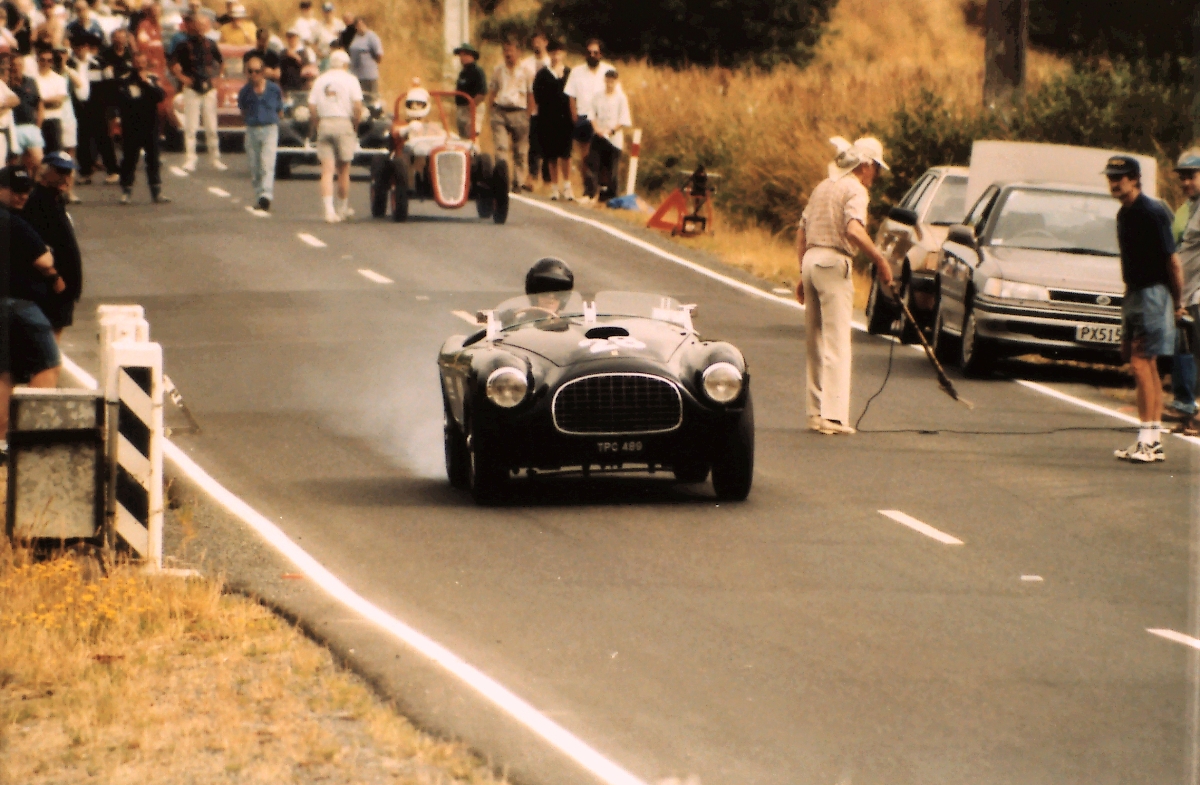
Peter smokes off the starting line for the hill cllimb at Three Mile Hill, Dunedin, New Zealand, March 1998.
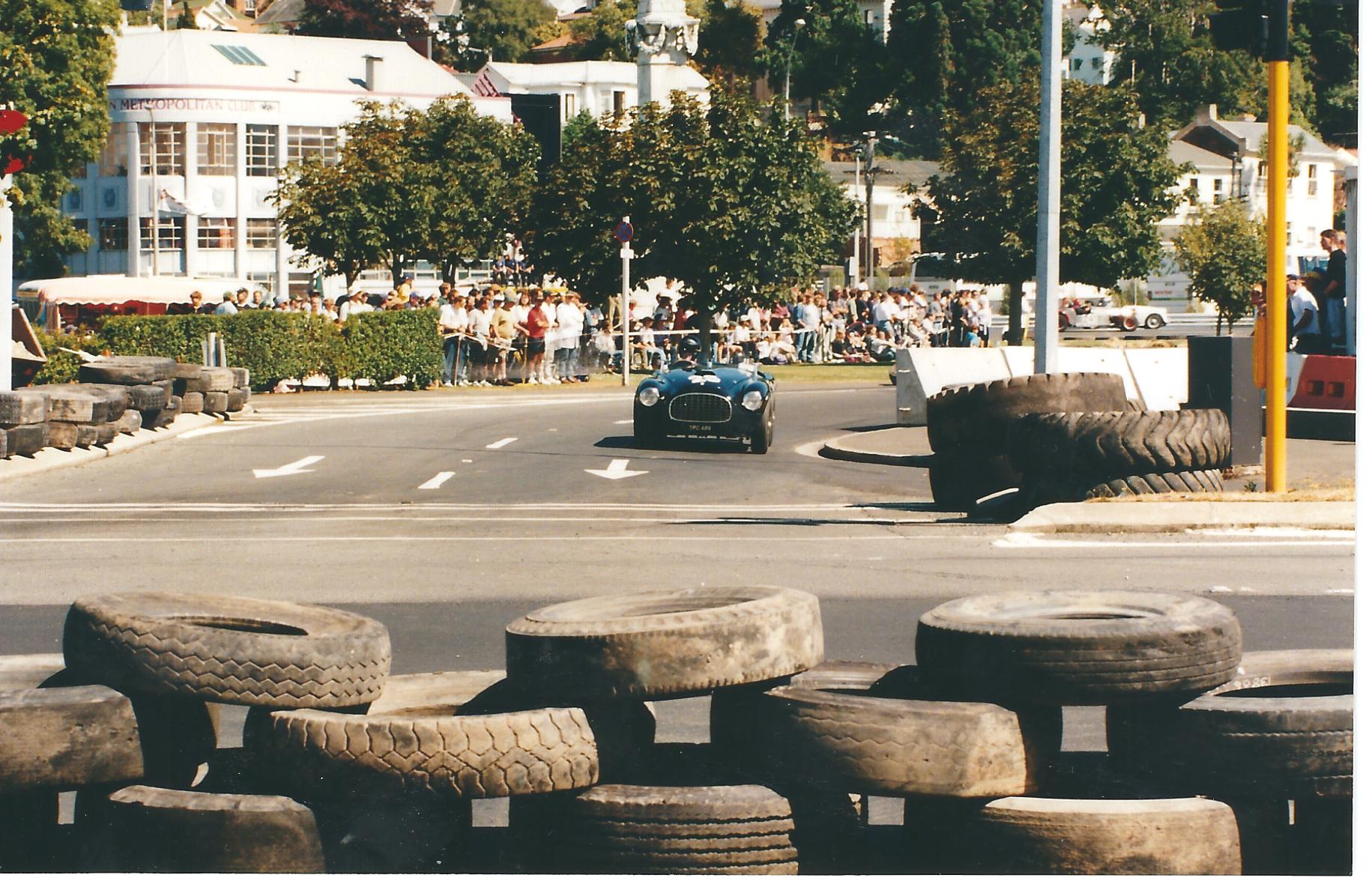
On the Dunedin, NZ, street circuit, 1997.
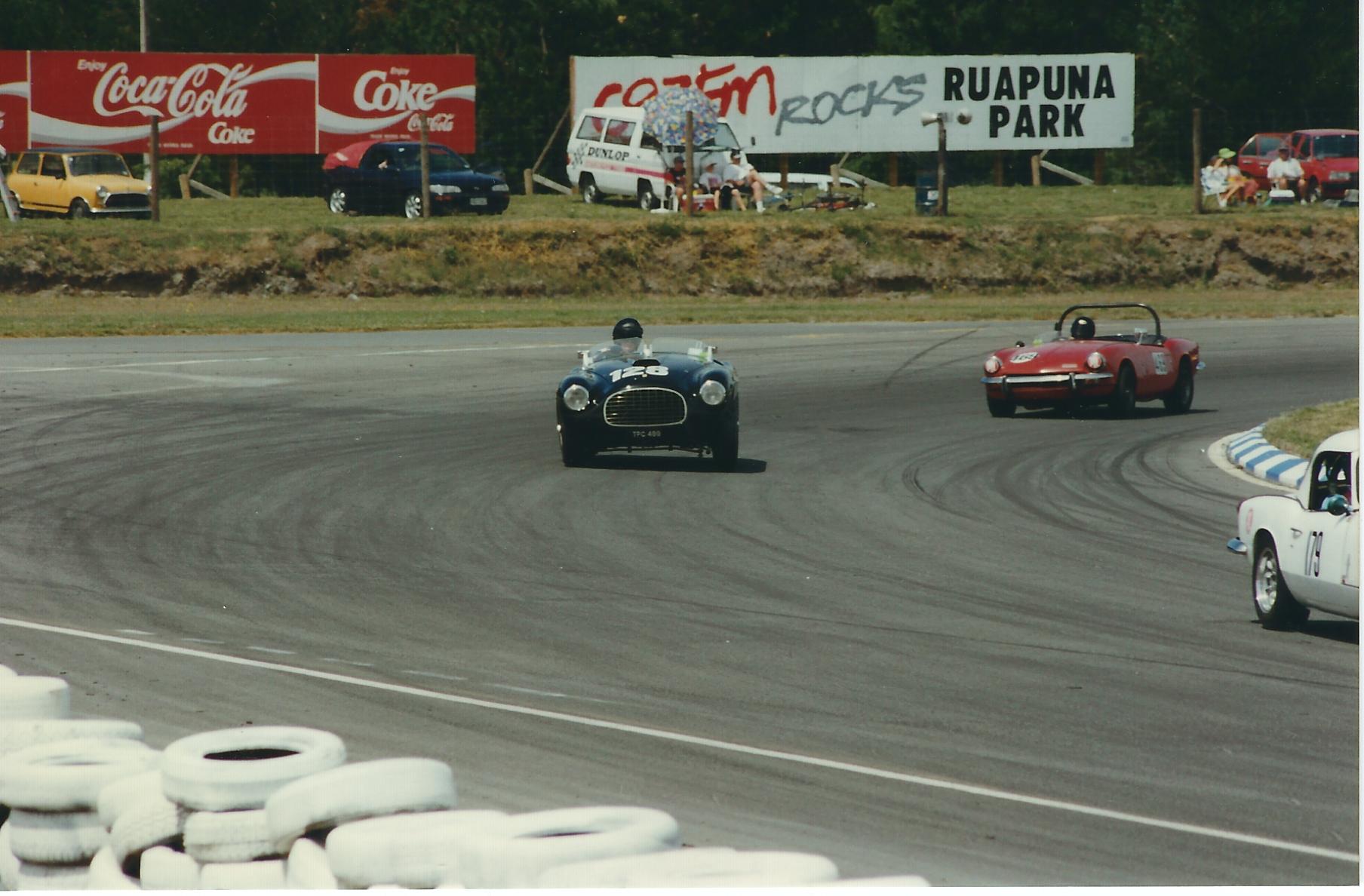
Racing at Ruapuna Park, NZ, January 1997.
|